Quantum magnetometers enter a clinical imaging trial
Room-temperature sensors let magnetoencephalography move with the patient instead of the other way around.
By Ruth Okonjo
Written in-house by the Field report desk — an explainer, not a report of a news event.
- Wearable sensor arrays replace fixed cryogenic helmets.
- First trial focuses on paediatric epilepsy mapping.
- Ambient magnetic shielding remains the cost driver.
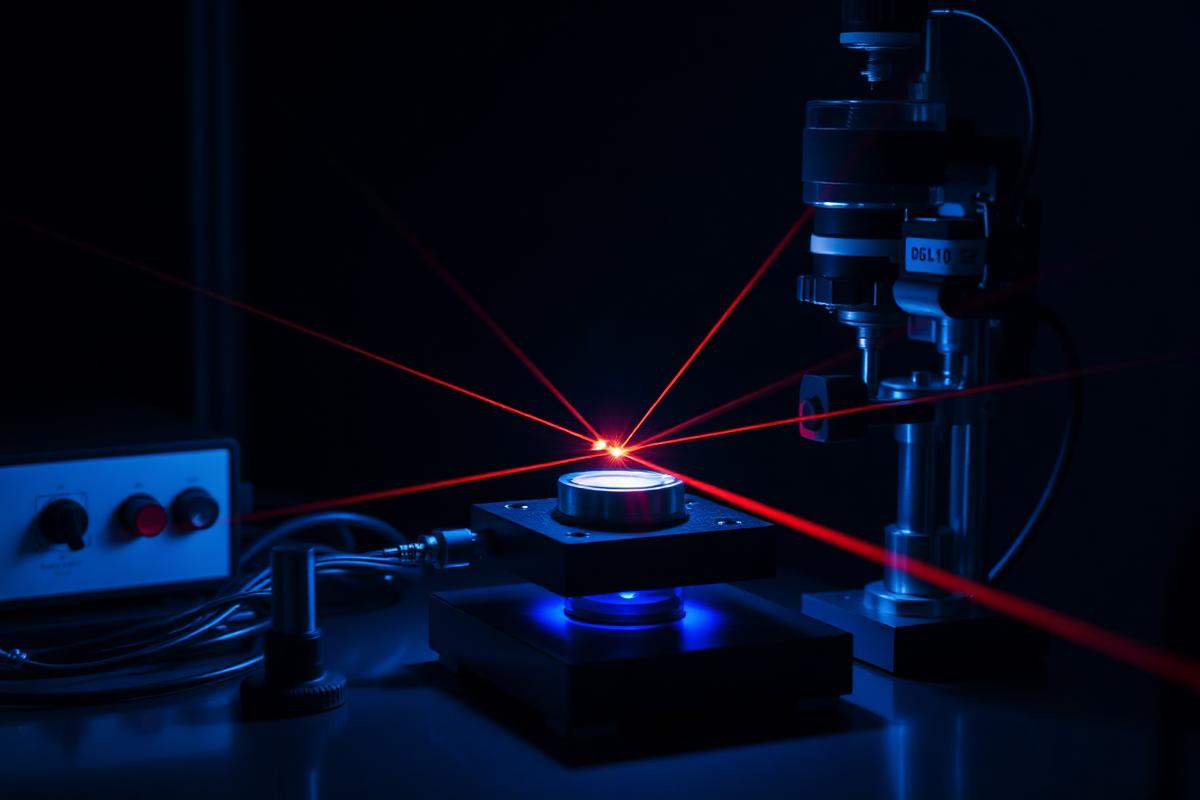
Quantum sensing is the part of the field already producing instruments people use. Optically pumped magnetometers work at room temperature, which means magnetoencephalography no longer requires a patient to sit perfectly still inside a cryogenic helmet.
The first trial targets paediatric epilepsy mapping, where patient movement has always limited data quality.
Shielding the ambient magnetic environment remains the dominant cost, and it is a building problem more than a physics one.
This story started as a thread in our Discord. Join the discussion with the researchers and engineers who work on it.
Related
Foundry reports step change in superconducting qubit yield
A shift in junction fabrication tightens the frequency spread that has plagued multi-chip modules.
Surface-code processor stays below threshold as it scales to 1,000 qubits
The logical error rate keeps falling as the code distance grows — the clearest sign yet that adding qubits now buys reliability instead of noise.
Open-source compiler cuts logical-qubit overhead by a third
A new lattice-surgery scheduler squeezes routing overhead out of fault-tolerant circuits, and it ships under a permissive license.