Why Qubit Connectivity Shapes Quantum Computer Design
A quantum processor’s connectivity determines which qubits can interact directly, influencing circuit depth, error exposure and the difficulty of implementing error correction.
By The Quantum Lab desk
Written in-house by the The Quantum Lab desk — an explainer, not a report of a news event.
- Limited connectivity forces compilers to move quantum information through additional, error-prone operations.
- Denser connectivity can simplify circuits but usually introduces hardware and control trade-offs.
- Connectivity must be evaluated alongside gate fidelity, crosstalk, calibration stability and error-correction requirements.
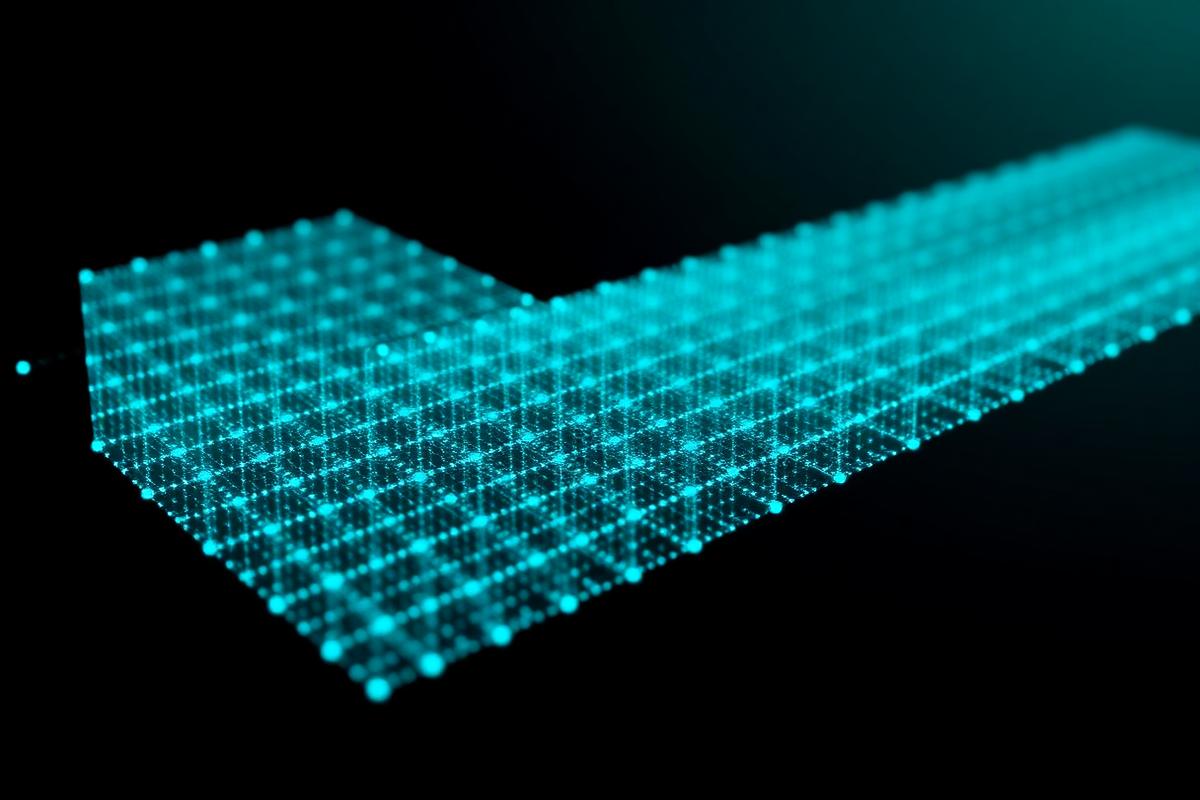
Quantum algorithms are commonly expressed as circuits containing gates between arbitrary pairs of qubits, but physical processors rarely provide every possible connection. Instead, each device has a coupling graph that specifies which qubits can interact directly. This graph reflects constraints imposed by the underlying qubit technology, control system and physical layout.
When two qubits are not directly connected, a compiler must transform the circuit to respect the hardware graph. A common method is to insert SWAP operations that move quantum states through intermediate qubits. Because a SWAP is built from multiple two-qubit gates, this routing increases circuit depth and exposes the computation to more errors and decoherence.
Greater connectivity can reduce routing overhead, but it is not free. Additional couplers, optical paths or interaction channels may complicate fabrication, calibration and control, while unwanted interactions can increase crosstalk. Engineers therefore seek useful connectivity rather than simply maximizing the number of links.
Connectivity differs across hardware platforms. Superconducting processors often use fixed local layouts, trapped-ion systems can mediate interactions among many ions within a chain, and neutral-atom arrays can use reconfigurable geometries and interaction protocols. These descriptions are not absolute: practical connectivity also depends on gate mechanisms, scheduling constraints and the quality of each available interaction.
The issue becomes more demanding in fault-tolerant architectures, where many physical qubits encode each logical qubit. Error-correcting codes require specific patterns of repeated measurements and interactions, so the hardware graph must support those operations efficiently. A processor with modest but regular local connectivity may therefore be better suited to a chosen code than a more densely connected device with less predictable errors.
This story started as a thread in our Discord. Join the discussion with the researchers and engineers who work on it.
Related
Surface-code processor stays below threshold as it scales to 1,000 qubits
The logical error rate keeps falling as the code distance grows — the clearest sign yet that adding qubits now buys reliability instead of noise.
Trapped-ion shuttling record pushes two-qubit fidelity past 99.9%
Moving ions between zones used to cost coherence. A revised trap geometry makes transport nearly free.

Open-source compiler cuts logical-qubit overhead by a third
A new lattice-surgery scheduler squeezes routing overhead out of fault-tolerant circuits, and it ships under a permissive license.