Why Neutral-Atom Quantum Computers Rearrange Their Qubits
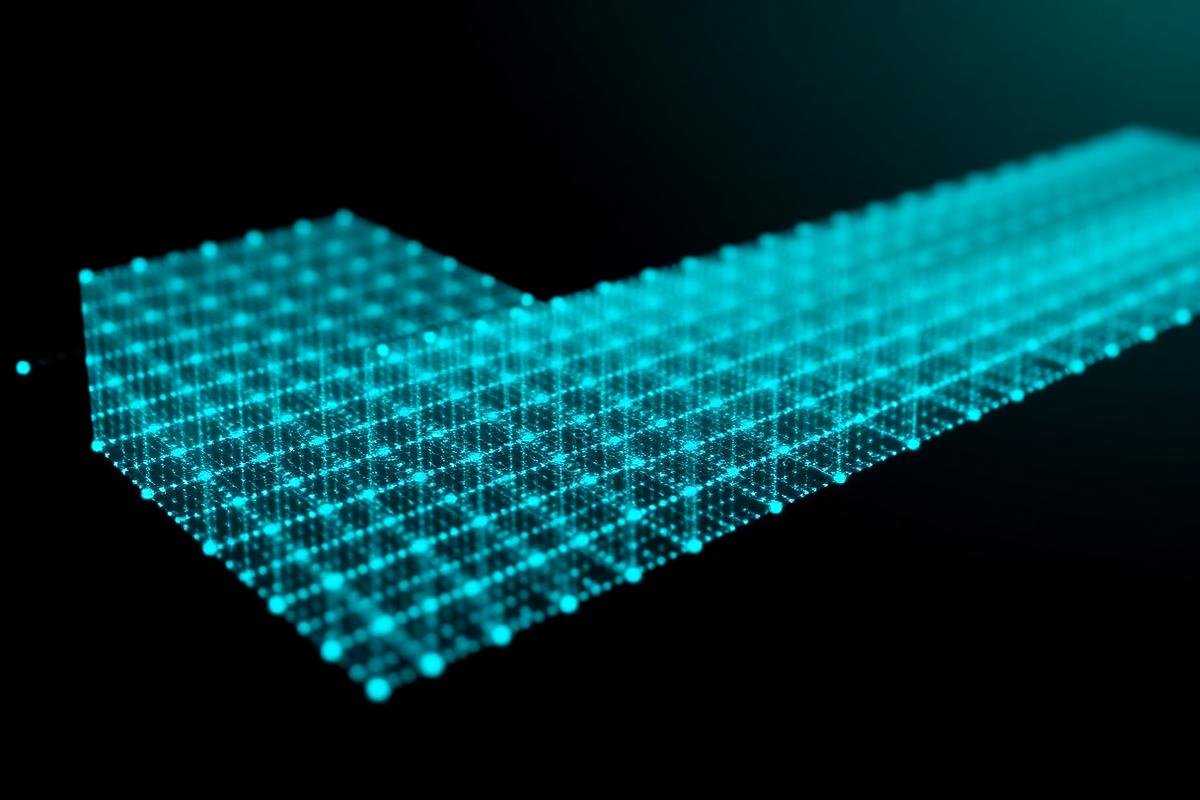
Optical tweezers can trap individual neutral atoms, but loading them initially produces an incomplete and irregular array. Rearrangement turns that stochastic pattern into the ordered geometry needed for quantum operations.
By The Quantum Lab desk
Written in-house by the The Quantum Lab desk — an explainer, not a report of a news event.
- Individual optical tweezers are not guaranteed to capture an atom during initial loading.
- Rearrangement uses movable traps to assemble defect-free qubit arrays from successfully loaded sites.
- Transport must be fast enough to limit atom loss but gentle enough to preserve qubit coherence and motional control.
Neutral-atom quantum processors often encode qubits in internal atomic states and hold the atoms with tightly focused laser beams called optical tweezers. A spatial light modulator, acousto-optic deflector or related optical system can generate many such traps in a programmable geometry.
The initial loading process is probabilistic, so some tweezers remain empty even when the apparatus provides more trapping sites than the computation requires. Cameras detect which traps contain atoms, producing a map from which control software can plan how to fill the desired array.
Rearrangement typically transfers atoms into movable tweezers and transports them to vacant target sites. The controller must choose routes that avoid collisions and excessive travel while assembling rows, grids or other interaction geometries.
Moving an atom is not equivalent to moving an abstract qubit without cost. Abrupt changes in trap position or depth can excite the atom's motion, while longer rearrangement sequences increase exposure to atom loss, laser noise and decoherence.
The engineering task therefore combines imaging, path planning and precise optical control in a feedback loop. Because atoms can also be lost during later operation, some systems can use spare atoms and repeat parts of the detection-and-rearrangement process, although the practical value depends on measurement, transport and reset overhead.
This story started as a thread in our Discord. Join the discussion with the researchers and engineers who work on it.
Related
Surface-code processor stays below threshold as it scales to 1,000 qubits
The logical error rate keeps falling as the code distance grows — the clearest sign yet that adding qubits now buys reliability instead of noise.
Trapped-ion shuttling record pushes two-qubit fidelity past 99.9%
Moving ions between zones used to cost coherence. A revised trap geometry makes transport nearly free.

Open-source compiler cuts logical-qubit overhead by a third
A new lattice-surgery scheduler squeezes routing overhead out of fault-tolerant circuits, and it ships under a permissive license.