
Why Fast Qubit Reset Matters for Quantum Computing
Resetting qubits reliably is necessary for repeated computation, error correction and efficient reuse of limited hardware.
By The Quantum Lab desk
Written in-house by the The Quantum Lab desk — an explainer, not a report of a news event.
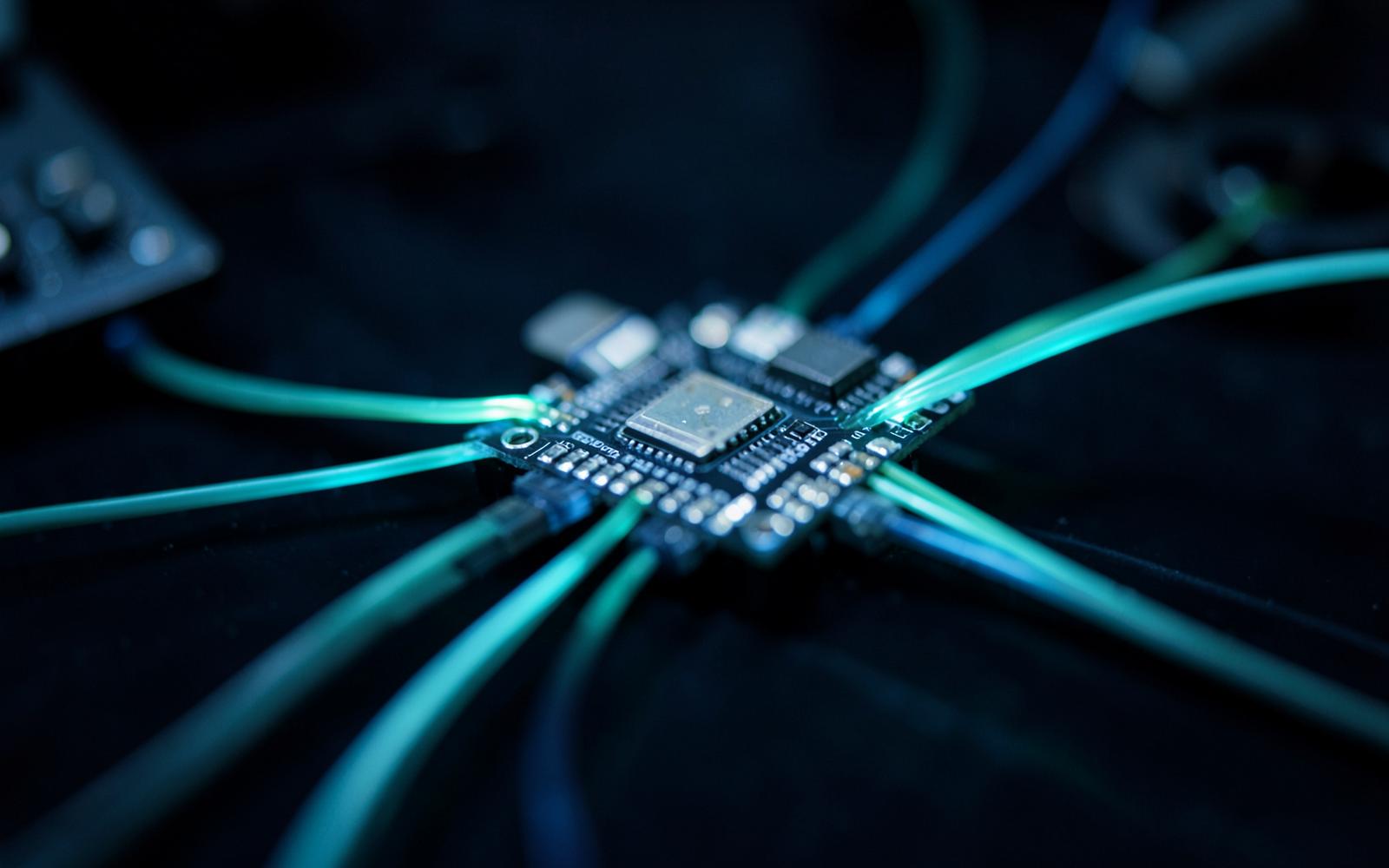
- Qubit reset must produce a known state without introducing significant errors elsewhere in the processor.
- Passive reset is simple but can be too slow for repeated quantum operations.
- Active and measurement-based reset reduce waiting time but add control complexity and new error pathways.
Quantum circuits generally assume that each qubit begins in a known state, usually the lowest-energy state labelled |0⟩. After measurement or interaction with its environment, however, a qubit may remain excited, occupy an unwanted level or retain correlations with other parts of the system. Reset is the process of returning it to a state suitable for the next operation.
The simplest approach is passive reset: wait for the qubit to relax toward thermal equilibrium. This requires little control hardware, but the waiting period must be long compared with the qubit’s energy-relaxation time. Residual thermal excitation can also prevent equilibrium from corresponding perfectly to |0⟩.
Active reset uses controlled operations to remove excitation more quickly. One method measures the qubit and applies a conditional pulse if the result indicates |1⟩; another transfers excitation into a resonator or auxiliary mode that dissipates energy rapidly. These methods can shorten reset time, but their performance depends on measurement accuracy, pulse calibration and the behaviour of the auxiliary system.
Reset becomes especially important in quantum error correction, where ancillary qubits are measured and reused across many correction cycles. An incorrectly reset ancilla can corrupt a later syndrome measurement or carry information from one cycle into the next. Reset errors can therefore create time-correlated faults that are more difficult for a decoder to interpret than isolated mistakes.
Engineers evaluate reset not only by how often it prepares |0⟩, but also by its duration and its effects on neighbouring qubits. Strong pulses, resonator population or conditional-control latency can introduce crosstalk and slow the overall cycle. Practical reset design is therefore a system-level trade-off among speed, state-preparation fidelity, hardware overhead and compatibility with repeated operation.
This story started as a thread in our Discord. Join the discussion with the researchers and engineers who work on it.
Related
Surface-code processor stays below threshold as it scales to 1,000 qubits
The logical error rate keeps falling as the code distance grows — the clearest sign yet that adding qubits now buys reliability instead of noise.
Trapped-ion shuttling record pushes two-qubit fidelity past 99.9%
Moving ions between zones used to cost coherence. A revised trap geometry makes transport nearly free.

Open-source compiler cuts logical-qubit overhead by a third
A new lattice-surgery scheduler squeezes routing overhead out of fault-tolerant circuits, and it ships under a permissive license.