
Why Atom Rearrangement Matters in Neutral-Atom Quantum Computers
Neutral-atom processors use imaging and movable optical tweezers to convert randomly loaded atoms into ordered qubit arrays, but the rearrangement process introduces its own engineering trade-offs.
By The Quantum Lab desk
Written in-house by the The Quantum Lab desk — an explainer, not a report of a news event.
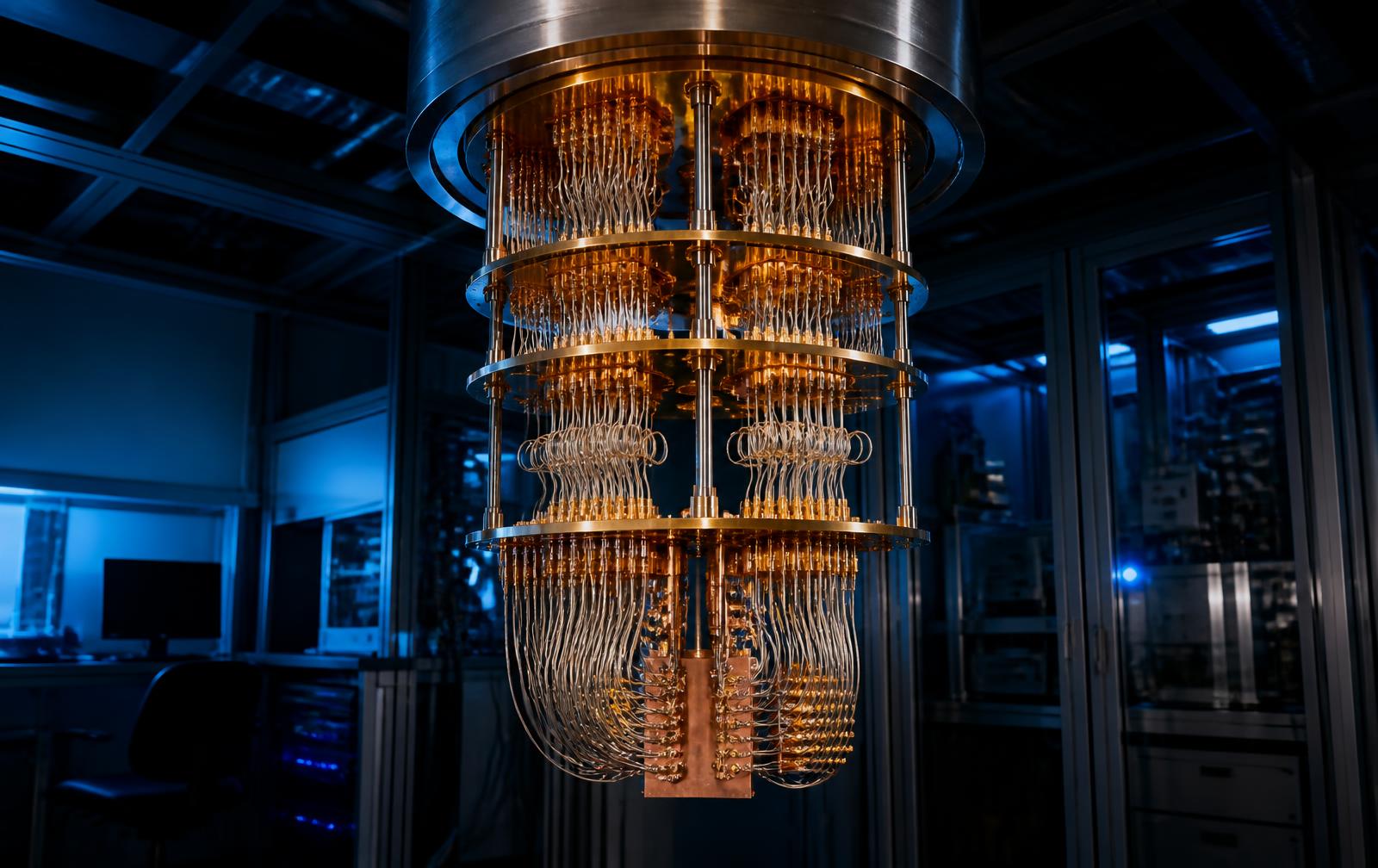
- Neutral atoms are typically loaded probabilistically, so an initially illuminated array contains empty sites.
- Imaging and movable optical tweezers can assemble a compact, nearly defect-free register before computation begins.
- Rearrangement must minimize atom loss, heating and preparation time while remaining scalable.
Neutral-atom quantum computers often encode qubits in internal states of individual atoms confined by tightly focused laser beams called optical tweezers. Loading atoms into these traps is generally probabilistic, leaving some sites empty. Because quantum circuits assume a known set of occupied qubit locations, the resulting pattern must be measured and reorganized.
The processor first images the array to determine which traps contain atoms. Control software then calculates how available atoms can be moved into a chosen target geometry, sometimes drawing from a surrounding reservoir of occupied sites. Movable tweezers, generated with beam-steering devices such as acousto-optic deflectors or spatial light modulators, transport the atoms between locations.
This rearrangement step is more than a matter of tidying the array. Empty sites can interrupt intended interactions, particularly when entangling operations rely on the distance-dependent Rydberg blockade between nearby atoms. A well-formed register therefore makes the interaction graph predictable and reduces the need to compile circuits around missing qubits.
Movement must be carefully controlled because atoms can be heated or lost if traps accelerate too abruptly, pass too close to one another or vary in depth. Imaging can also disturb atoms, while longer preparation sequences increase exposure to background-gas collisions and other loss mechanisms. Engineers must balance transport speed against the probability that every required atom reaches its destination and remains cold enough for high-quality control.
As systems grow, rearrangement becomes a scheduling and control problem involving many simultaneous trajectories. Parallel motion can shorten preparation time, but it adds constraints related to beam power, path crossings and unwanted perturbations of stationary atoms. Efficient atom sorting is therefore part of the hardware architecture, linking optical design, real-time image processing and quantum-circuit requirements.
This story started as a thread in our Discord. Join the discussion with the researchers and engineers who work on it.
Related
Surface-code processor stays below threshold as it scales to 1,000 qubits
The logical error rate keeps falling as the code distance grows — the clearest sign yet that adding qubits now buys reliability instead of noise.
Trapped-ion shuttling record pushes two-qubit fidelity past 99.9%
Moving ions between zones used to cost coherence. A revised trap geometry makes transport nearly free.

Open-source compiler cuts logical-qubit overhead by a third
A new lattice-surgery scheduler squeezes routing overhead out of fault-tolerant circuits, and it ships under a permissive license.