How Bosonic Codes Protect Quantum Information in Oscillators
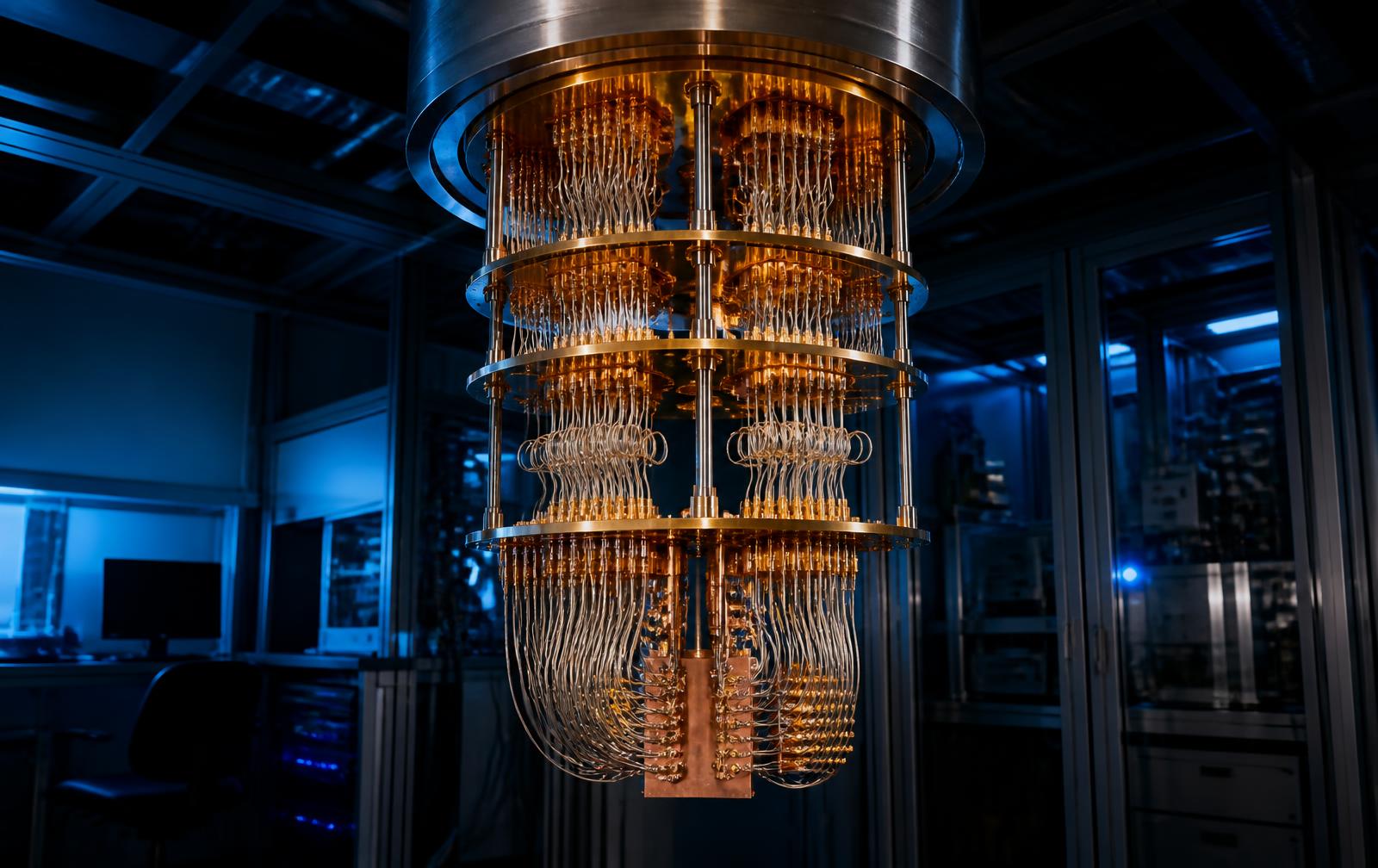
Bosonic quantum error-correcting codes encode a logical qubit across many states of a single harmonic oscillator, allowing common errors to be detected and corrected with fewer physical components.
By The Quantum Lab desk
Written in-house by the The Quantum Lab desk — an explainer, not a report of a news event.
- Bosonic codes encode information in carefully chosen superpositions of oscillator states rather than in individual two-level systems.
- Their structure can make dominant errors such as photon loss detectable without directly measuring the stored quantum information.
- Practical protection still depends on accurate control, ancillary systems and repeated error-syndrome measurements.
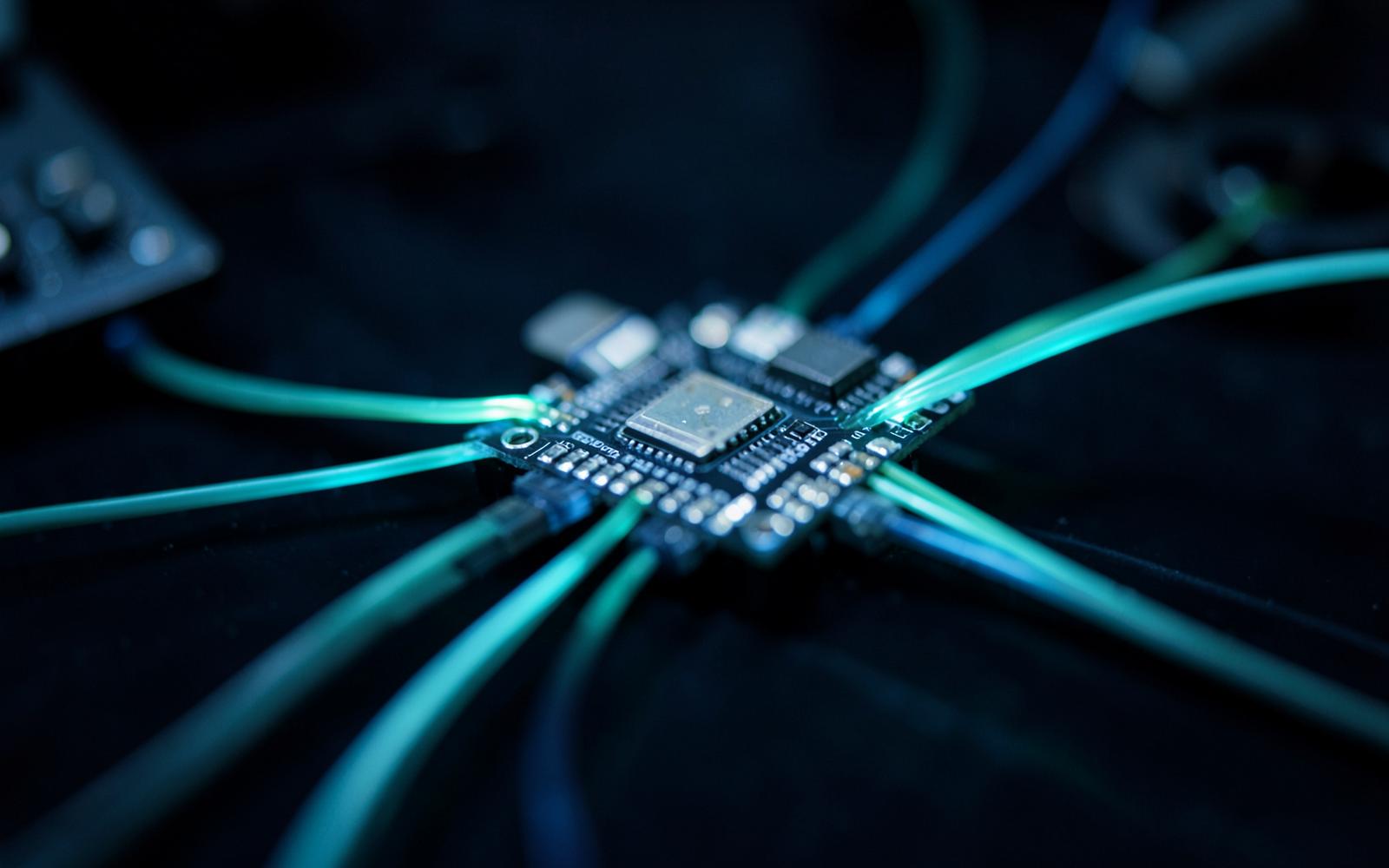
Most quantum error-correction schemes describe a logical qubit as information distributed across many physical two-level qubits. Bosonic codes take a different approach by using the large state space of a harmonic oscillator, such as a microwave cavity or a vibrational mode. Different logical states are represented by structured superpositions of the oscillator’s energy states.
This encoding can be tailored to the errors most likely to affect the oscillator. In a microwave cavity, for example, photon loss changes the photon-number distribution in a predictable way. A code can arrange its logical states so that this change reveals that an error occurred without revealing whether the encoded state was logical zero, logical one or a superposition.
Several bosonic-code families implement this principle differently. Cat codes use superpositions of coherent states, binomial codes use selected combinations of number states, and Gottesman-Kitaev-Preskill codes organize states as a grid in the oscillator’s phase space. Each family offers different trade-offs among error sensitivity, state preparation, measurement and control complexity.
An oscillator does not perform error correction by itself. Experiments generally couple it to an ancillary two-level system that helps prepare encoded states, extract error syndromes and apply corrective operations. Imperfections in that ancillary system or in the control pulses can introduce additional errors, so the full device must be evaluated rather than the oscillator alone.
Bosonic encoding may reduce the number of separate hardware elements required for a protected qubit, but it does not remove the need for fault-tolerant engineering. Finite energy, imperfect measurements and uncorrected error channels limit performance, while repeated correction steps can themselves add noise. The central engineering question is whether the encoding suppresses errors faster than its control procedures create them.
This story started as a thread in our Discord. Join the discussion with the researchers and engineers who work on it.
Related
Entanglement distributed across a live metropolitan fibre network
Not a dedicated dark-fibre link — the demonstration ran alongside ordinary classical traffic on deployed infrastructure.
Classical simulation closes in on another advantage claim
A tensor-network method reproduces sampling results that were argued to be out of classical reach.
Surface-code processor stays below threshold as it scales to 1,000 qubits
The logical error rate keeps falling as the code distance grows — the clearest sign yet that adding qubits now buys reliability instead of noise.